Does Listening Count as Reading? A Carpenter's Ruling
September 3, 2026
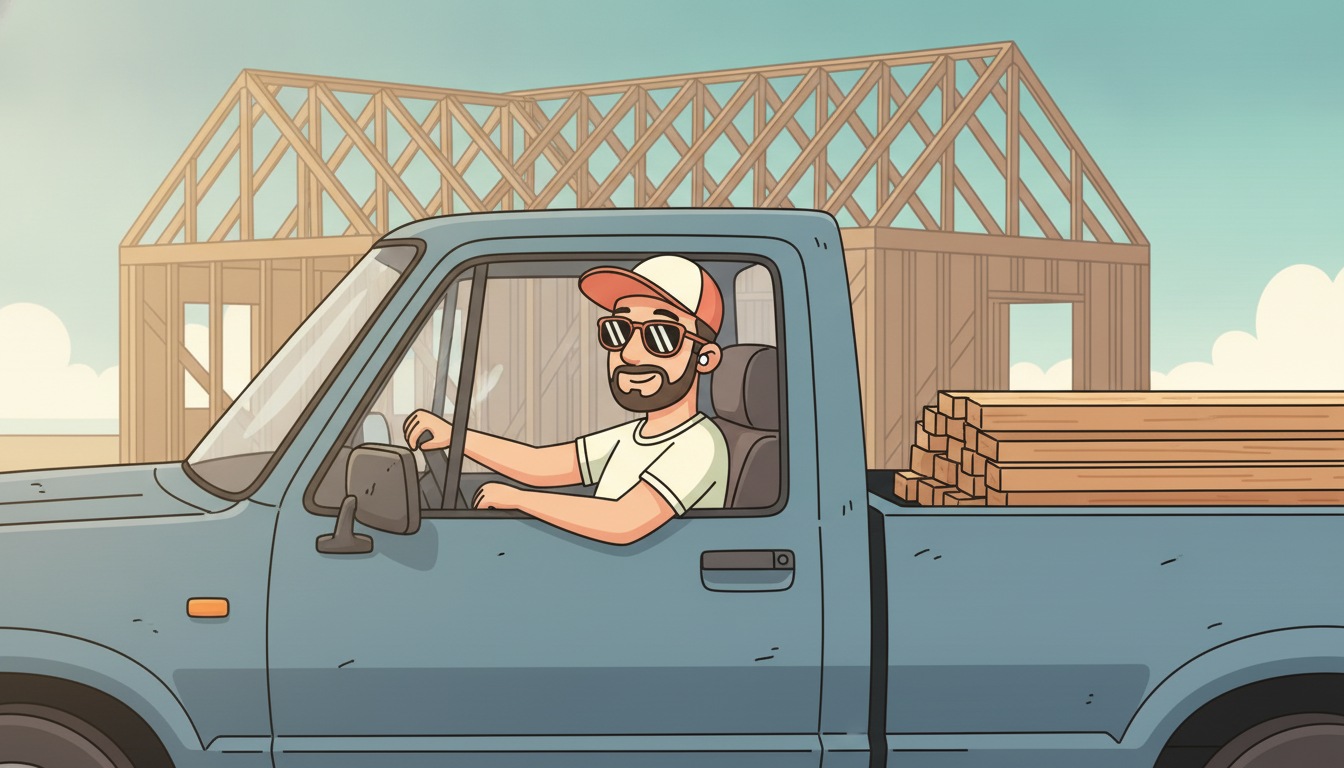
A guy on my crew — good framer, terrible opinions — heard me talking about a book I’d “read” and stopped me cold. “You didn’t read it,” he said. “You listened to it. Doesn’t count.”
I’ve been chewing on that one ever since. Mostly because he says it like he’s caught me cheating on a test.
So let me lay it out, fair and square, and then I’ll hand down my ruling. I’ve earned it. This year I’ve gone through more books than any year of my life, and I did it two ways: I listen on the drive to the job site, and I read on the balcony when the prairie finally lets me escape somewhere warm. Both hands full of story. One set of eyes, one set of ears.
The case against, stated honestly
I’ll give the other side its due, because there’s a real argument in there.
When you read with your eyes, you set the pace. You slow down for a sentence that hits. You flip back three pages when you lose the thread. You see how a name is spelled, catch the little jokes in the chapter titles, sit with a paragraph that knocked the wind out of you. A narrator doesn’t stop for any of that. They roll on at their pace, not yours, and if your mind wanders for thirty seconds on the highway, you just missed a plot point and you’re not going back for it.
That’s the honest version of my framer’s complaint. It’s not snobbery — it’s a real difference. Reading with your eyes is slower, and slower can mean deeper.
Fine. Noted. Now here’s where he loses me.
What your brain actually does with a story
Somewhere along the way, “reading” got treated like the eyes are the point. They’re not. The eyes are a delivery truck. The story gets unloaded somewhere behind them, in the part of you that builds the room, hears the characters talk, feels the dread crawl up the stairs.
Squiggles on a page mean nothing until your brain turns them into sound and picture. That’s the whole job — decoding marks into a voice in your head. An audiobook just skips the middle step and hands your brain the voice directly. Same house, delivered to the same door. One truck dropped it at the curb; the other carried it inside.
I’m not saying they’re identical. I’m saying the thing that matters — did the story get in, did it move you, do you carry it around after — happens in the same place either way. My framer wants a medal for using the harder truck. The story doesn’t care which truck it rode in on.
Where audio actually wins
Here’s the part the snobs skip: audio isn’t the lazy version. For me it’s the version that exists at all.
I build houses. My hands are busy ten hours a day, and my eyes are on a chalk line, not a page. If listening didn’t count, I’d get through maybe four books a year — the ones I read on vacation. Instead I “read” the whole drive out to a site and the whole drive back. That litRPG series everybody told me to try? I’ve got fifty hours of it in me now, most of it logged on Ring Road with a coffee going cold in the cup holder. A good narrator turns a boring commute into the best part of my day.
Audio wins when your eyes are tired, your hands are full, or your day left you no chair to sit in. It wins for the long series you’d never make time for otherwise. And an honest truth — some books are better out loud. A narrator who nails the voices can lift a book a whole grade. The good ones are performing, not just reading, and you feel it.
Where print still wins
I’m not about to pretend paper lost. It didn’t.
When I actually want to slow down — a mystery where I’m trying to beat the detective to it, a sentence so good I want to read it twice — print wins clean. You can flip back. You can stop and stare at the wall for a minute. You control the whole thing. There’s no narrator’s voice sitting between you and the character; you get to build them yourself.
And there’s the plain, quiet pleasure of it. A book on the balcony at 5am, coffee steaming, nobody awake yet — a phone can’t touch that, and honestly neither can earbuds. Some hours are made for the page.
So I don’t pick a side. I use the drive for one and the balcony for the other, and I’ve never once felt like I got a discount version of the story on either.
The ruling
Alright. Gavel down.
Listening counts. If the story got into you — if you know the characters, felt the turns, carry the ending around a week later — you read the book. Full stop. The eyes are one door in. The ears are another. Same house on the other side.
The only reading that doesn’t count is the reading you didn’t do because somebody made you feel dumb about how you were doing it. If audio is the thing that gets you through twelve books this year instead of two, then audio is you reading twelve books this year. Count every one.
I told my framer all this on a lunch break. He thought about it, took a bite of his sandwich, and said, “Nah.” That’s alright. I’ll be over here, three books ahead of him, listening to the fourth on the drive home.